Employee Onboarding Kits: 15 Ideas for New Hires
Employee Onboarding Kits: 15 Ideas for New Hires
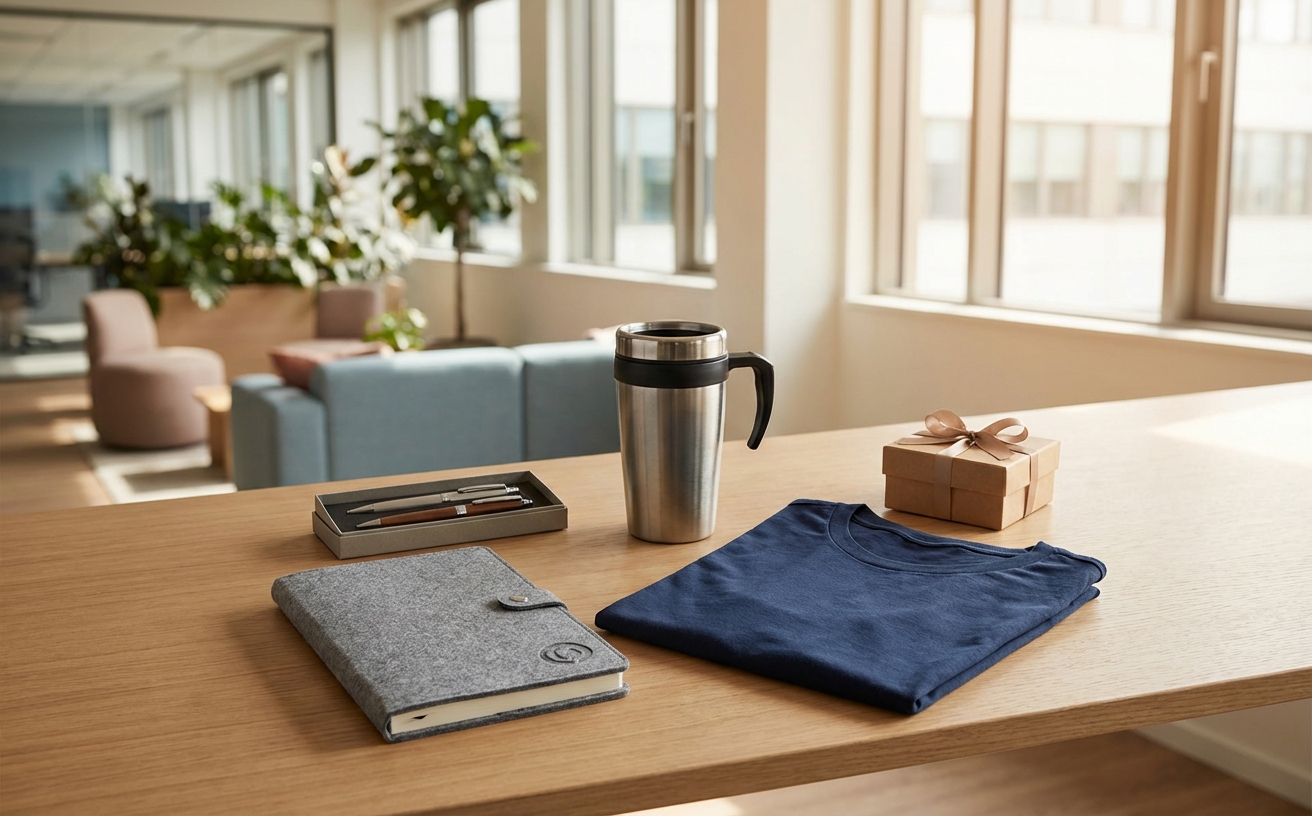
A new hire's first day sets the tone for everything that follows. The welcome kit sitting on their desk — or arriving at their door — is the first physical proof that your company prepared for them. It tells them they belong here.
Yet too many companies treat onboarding kits as an afterthought. A random mug. A wrinkled t-shirt in the wrong size. A stack of paperwork in a plastic bag. That's not a welcome. That's a missed opportunity.
This guide covers 15 employee welcome kit ideas that actually work, plus how to budget, scale, and assemble kits without burning through your HR team's time.
Why Employee Onboarding Kits Matter
The first 90 days determine whether a new hire stays or starts browsing job boards again. Research from the Brandon Hall Group found that organizations with strong onboarding improve new hire retention by 82%. A welcome kit won't fix a broken culture, but it's a tangible signal that you've invested in someone's arrival.
First impressions are physical. Before a new hire meets their manager, sits through orientation, or opens their laptop, they see what's waiting for them. A thoughtfully assembled kit communicates care and preparation. A bare desk communicates the opposite.
Remote and hybrid teams need it more. When there's no office lobby, no desk neighbor, no first-day lunch with the team, the welcome kit becomes the primary physical touchpoint. For remote hires, it may be the only branded item they interact with for weeks. A well-designed kit shipped to their home creates a moment of connection that Slack messages can't replicate.
Employer branding starts internally. New hires post unboxing photos. They wear the hoodie on video calls. They put stickers on their laptops. Every item in your kit is a potential brand impression — seen by the new hire's network, their family, and their social media followers. Companies like Notion, Stripe, and Shopify have turned onboarding kits into recruiting tools because candidates see them and think, "I want to work there."
The kit doesn't need to be expensive. It needs to be intentional.
15 Employee Welcome Kit Ideas
Not every kit needs 15 items. Most strong kits have 5-7 well-chosen pieces. Use this list to pick what fits your budget, culture, and team size.
1. Branded T-Shirt or Hoodie
Estimated cost: $12-$35 per unit
This is the anchor item for most kits. A comfortable, well-fitting tee or hoodie in your brand colors gets worn repeatedly — at the office, at home, at the gym. Skip the giant logo across the chest. A small embroidered logo on the left chest or a tasteful back print looks better and gets worn more often.
Offer size options during the onboarding process. Nothing undermines a welcome faster than a shirt that doesn't fit. Collect sizes when you send the offer letter, not on the first day.
2. Insulated Tumbler or Water Bottle
Estimated cost: $8-$20 per unit
Drinkware is one of the highest-retention promotional items. A quality insulated tumbler gets used daily — at desks, in meetings, on commutes. Choose double-wall stainless steel over cheap plastic. The cost difference is $4-6 per unit, but the perceived value jumps significantly.
Stick with neutral colors (matte black, white, navy) with a subtle logo. Tumblers in odd brand colors tend to stay in desk drawers.
3. Laptop Sticker Pack
Estimated cost: $2-$5 per pack
Stickers are low-cost, high-impact items that give new hires a way to personalize their workspace. Include a mix of your company logo, team-specific designs, and a few fun options. A pack of 5-8 die-cut stickers costs almost nothing at volume but creates an immediate sense of belonging.
Stickers also travel. They show up on laptops at coffee shops, co-working spaces, and conferences — extending your brand reach for pennies.
4. Notebook and Pen Set
Estimated cost: $6-$15 per set
A quality notebook paired with a decent pen remains a staple for a reason. Even in fully digital workplaces, people reach for paper during brainstorms and 1:1 meetings. Choose a softcover A5 notebook with your logo debossed on the cover — it looks clean and professional without being flashy.
Skip the ultra-cheap ballpoint pens. A rubberized gel pen or a metal click pen costs $2-4 more and won't end up in a junk drawer by day 3.
5. Wireless Charging Pad
Estimated cost: $10-$18 per unit
A branded wireless charging pad sits on every desk, every day. It's functional, visible, and appreciated. Choose a slim, round or square design with your logo printed or engraved on the surface. Make sure it supports both iPhone and Android standards.
This item works especially well in tech-forward companies where employees expect modern tools. At higher quantities (250+), unit costs drop below $10.
6. Personalized Welcome Card
Estimated cost: $1-$3 per card
Don't underestimate the handwritten note. A card signed by the team or the direct manager adds a human element that branded products can't replace. Use a high-quality card stock with your company branding on the outside and a handwritten message inside.
For remote teams shipping kits in advance, have the manager write the card and include it before the box ships. This small detail consistently gets mentioned in new-hire surveys as a standout moment.
7. Tote Bag or Backpack
Estimated cost: $8-$40 per unit
A canvas tote bag ($8-$15) works for everyday carry — groceries, gym, commuting. A branded backpack ($25-$40) positions as a higher-tier item for roles where you want to invest more. Either way, bags get seen in public regularly, making them strong brand ambassadors.
Choose durable materials. A tote that rips after 2 weeks of use doesn't reflect well on your brand.
8. Desk Organizer
Estimated cost: $10-$25 per unit
A branded desk organizer — bamboo, molded plastic, or leather-look — gives new hires a functional item for their workspace. Include slots for pens, phones, business cards, and small accessories. This works particularly well for in-office and hybrid teams.
Bamboo organizers with a laser-engraved logo have a clean, modern look and cost $12-$18 at quantities of 100+.
9. Custom Socks
Estimated cost: $5-$12 per pair
Custom-knit socks with your brand colors or a subtle pattern have become a favorite in tech and creative industry kits. They're unexpected, fun, and surprisingly popular on social media. Choose crew-length with a comfortable cotton-poly blend.
The key is design quality. Work with a supplier who can produce detailed knit patterns, not just a stretched logo across the ankle.
10. Snack Box
Estimated cost: $15-$35 per box
A curated snack box adds a consumable element that makes the kit feel generous. Include a mix of sweet and savory — individually wrapped items work best for sharing and hygiene. Consider dietary restrictions by offering a standard mix with clearly labeled options.
For remote hires, a snack box shipped with the kit makes the unboxing feel like a gift, not just company-issued supplies. Source from local vendors for an extra touch.
11. Lanyard and Badge Holder
Estimated cost: $3-$7 per set
For companies with physical offices, a branded lanyard with a quality badge holder is practical from day 1. Use a detachable buckle design and a soft woven material — cheap lanyards with scratchy polyester get replaced immediately.
Pre-print the employee's name on the badge if your timeline allows. Arriving to find your name already prepared reinforces that the company was ready for you.
12. Branded Cap
Estimated cost: $8-$18 per unit
A structured 5-panel or dad cap with an embroidered logo is a versatile addition. Caps work across seasons and settings — casual Fridays, company outings, outdoor events. Choose a neutral base color (black, navy, olive) with a tonal or contrasting logo.
Avoid oversized logos. A small embroidered mark on the front panel looks sharp and gets worn outside the office.
13. Bluetooth Speaker
Estimated cost: $15-$30 per unit
A compact Bluetooth speaker is a higher-value item that works well in kits for senior roles, sales teams, or creative departments. Choose a model with good sound quality at its price point — there are strong options in the $18-$25 range with branded imprint areas.
This item elevates the perceived value of the entire kit. Pair it with 2-3 simpler items and the total kit still feels generous without a large budget.
14. Company Book or Culture Guide
Estimated cost: $5-$15 per copy
Some companies produce a printed culture book — part manifesto, part employee handbook, part brand story. It doesn't need to be long. A 20-30 page booklet with your company's history, values, team photos, and a few insider tips gives new hires context that an orientation deck can't match.
If you don't have a printed book, consider a branded pocket guide with key contacts, office maps, tool logins, and first-week tips. Practical information in a physical format gets referenced more than a buried Notion page.
15. Desk Plant Kit
Estimated cost: $8-$18 per kit
A small succulent or herb growing kit in a branded pot adds warmth to any desk setup. Choose low-maintenance plants — succulents, air plants, or herb seed kits that don't require a green thumb. Include a branded pot or planter with care instructions.
Plants improve workspace mood and air quality. They also make great video call backgrounds for remote workers.
How to Build a Kit That Scales
Building kits for 5 people is straightforward. Building kits for 50 or 500 people per year requires a system.
Choose 5-7 core items. Start with items that work across all departments and roles. A t-shirt, tumbler, notebook, sticker pack, and welcome card form a solid foundation. Add 1-2 role-specific items (a backpack for field teams, a wireless charger for desk-based roles) as optional upgrades.
Standardize your box. Use one box size that fits your core kit. A 12" x 10" x 6" corrugated box handles most combinations. Standardizing reduces packaging costs and simplifies assembly. If you're using branded packaging, design the box once and reorder as needed.
Use a supplier for assembly. Once you're onboarding more than 10 people per month, self-assembly burns time. A fulfillment partner can store your inventory, assemble kits to your spec, and ship on demand. You send a list of new hires; they handle the rest. Anybigworks offers assembly and kitting services that handle this end-to-end.
Set up a reorder process. Track inventory levels for each item. Set reorder points at 30 days of supply so you're never scrambling before a big hiring class. Most items have 2-4 week production lead times, so planning ahead prevents gaps.
Budgeting for Onboarding Kits
Kit costs vary widely depending on item selection, customization level, and order volume. Here's what you can build at each tier.
$25 Per Kit
At this level, focus on 3-4 high-impact items. A branded t-shirt ($12), sticker pack ($3), notebook and pen ($7), and welcome card ($2) comes in at $24. This tier works well for companies onboarding at volume or operating with tight HR budgets. It covers the essentials and still feels intentional.
$50 Per Kit
The sweet spot for most mid-size companies. You can include a t-shirt ($15), insulated tumbler ($12), notebook and pen ($8), sticker pack ($3), welcome card ($2), and a tote bag ($10). Total: $50. This kit has variety, utility, and enough items to fill a branded box with visual impact.
$75 Per Kit
At $75, you can add a premium item like a wireless charger or Bluetooth speaker. A typical build: hoodie ($28), tumbler ($14), wireless charger ($12), notebook set ($8), sticker pack ($3), welcome card ($2), custom socks ($8). This tier signals serious investment in new hires and works well for competitive hiring markets.
$100+ Per Kit
The executive-level kit. Include a branded backpack ($35), hoodie ($28), Bluetooth speaker ($20), snack box ($18), and a culture book ($10). At this budget, the unboxing experience itself becomes part of the brand — add tissue paper, a printed insert, and a branded box. This tier is common for senior hires, sales teams, and companies in competitive talent markets.
Volume pricing matters. At 100+ kits per year, most items drop 15-25% in unit cost. At 500+, you're looking at 25-40% savings. Check our pricing page for current volume breaks on individual items.
Custom Packaging for Your Kits
The box itself is the first thing a new hire sees. A plain brown box with items tossed inside sends a different message than a branded box with everything arranged intentionally.
Branded box options. A custom-printed corrugated box with your logo and colors costs $3-$8 per unit at quantities of 100+. For a mid-range approach, use a plain white or kraft box with a branded sticker seal and a printed belly band. This cuts costs to $1-$3 per box while still looking polished.
Interior design matters. Crinkle-cut paper fill ($0.50/box) gives a gift-like feel. Custom-cut foam inserts ($2-$5/unit) hold items in position for a premium unboxing. At minimum, use tissue paper and arrange items face-up so the first thing a new hire sees when they open the box is your brand, not the bottom of a water bottle.
Unboxing as employer brand. New hires photograph their welcome kits. They share them on LinkedIn, Instagram, and in group chats with friends. A well-designed unboxing moment is free employer branding. Include a small card that says "Share your first day" with your company hashtag — it's a gentle nudge that drives organic content.
Anybigworks can design and produce custom packaging for your kits, from simple branded boxes to full presentation packaging with inserts.
Assembly and Fulfillment: DIY vs. Outsourced
Every growing company hits a point where assembling kits in-house stops making sense. Knowing when to make that switch saves money and headaches.
The true cost of DIY assembly. It's not just the time spent putting items in boxes. It's the coordination — tracking inventory across 7 items, chasing down size preferences, scheduling assembly around other HR priorities, dealing with shipping logistics, and storing boxes of branded merchandise in an already-full office closet. At 5-10 kits per month, it's manageable. At 20+, it's a part-time job.
When to outsource. Consider outsourcing when any of these apply: you're onboarding more than 15 people per month, your team is spending more than 4 hours per week on kit assembly, you're shipping to multiple locations (especially for remote hires), or you're running out of storage space for kit inventory.
What outsourced fulfillment looks like. A fulfillment partner warehouses your branded items, assembles kits on demand, and ships directly to new hires. You provide a new hire list with names, sizes, and addresses. The partner picks, packs, and ships — usually within 2-3 business days. Most partners offer branded packing slips, welcome cards, and custom box configurations.
Cost comparison. Internal assembly costs $8-$15 per kit in labor when you account for staff time (even if it's "free" employee time — it's not). Outsourced assembly typically runs $5-$12 per kit plus shipping, with the added benefit of professional packing and no storage overhead. At 200+ kits per year, outsourcing is almost always more cost-effective.
Anybigworks handles kit assembly and fulfillment for companies onboarding anywhere from 10 to 1,000+ people per year.
Getting Started
You don't need to launch a perfect kit program on day 1. Start with a pilot and iterate.
Build a pilot kit. Pick 5 items from the list above that fit your budget and culture. Order enough for your next 10-15 hires. Choose items that don't require complex customization — a printed t-shirt, a tumbler with your logo, a notebook, sticker pack, and welcome card is a strong starting point.
Collect feedback. After your first batch of new hires receives their kits, ask 3 simple questions: What was your favorite item? Was anything missing? Did the kit make you feel welcomed? Use that feedback to refine your selection before scaling up.
Scale when you're ready. Once you've validated your kit contents, set up a standing order with your supplier. Establish reorder points, standardize your box, and consider outsourcing assembly if your hiring pace justifies it.
Get help if you need it. Building a kit from scratch takes time — sourcing items, comparing pricing, coordinating production timelines, and managing inventory. Anybigworks works with HR teams and office managers to design, source, and fulfill custom onboarding kits from start to finish.
Need help building your employee welcome kit? Tell us what you're looking for and we'll put together a recommendation with pricing.
Ready to build your onboarding kit program?
Build Your Onboarding Kit | See Assembly Options
Related reading: